

Simple Hackney App Helps Bay Area Riders Save on Uber, Lyft, and Waymo
Simple hack for cheaper Ubers, Waymos, and Lyfts arrives in Bay Area
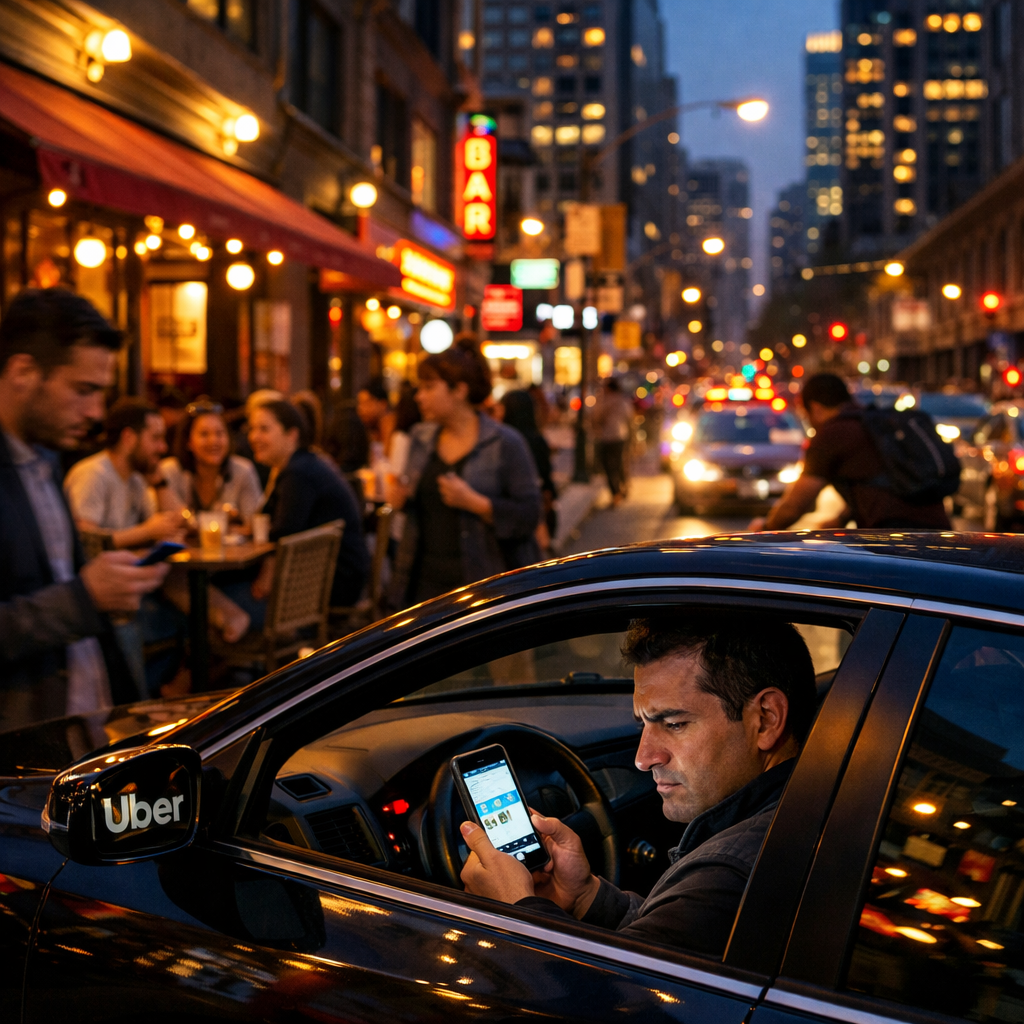
By Stephen Counci ,Tech ReporterNew app Hackney brings live prices from Waymo, Uber, Lyft, and Curb onto a single screen, letting a customer easily price-shop, as it’s known, every time they ask for a car pickup. Hackney, following in the footsteps of Obi, a similar app, is a solution for the classic issue of dancing between ride-hail services’ apps in search of the lowest price.
Advertisement
Article continues below this ad
“Consumers don’t have all the information at once,” Griffin Li, the app’s 19-year-old creator, told SFGATE. “They have to sort of make suboptimal decisions and spend more money. And this is just a way to help.”
Hackney and Obi both ask for users to log in to their ride-hailing accounts, so the apps aren’t replacements for having Uber, Lyft, or Waymo on your phone. But by compiling the prices all at once, they provide efficient ways to snag the lowest-priced ride. Hackney is more bare-bones, with a straightforward, final-price-focused design. Obi is a little busier, auto-updates prices, and shows Uber’s pre- and post-discount prices.
Hackney aggregates Lyft, Uber, and Waymo prices from a user’s accounts. Once they pick an option, the app sends the user to the respective ride-hail service’s app.
Courtesy of HackneyThe crucial step in building Hackney, Li said, was figuring out a way to have the app “talk” to the ride-hailing companies’ servers. The app pulls prices directly through the phone’s Uber, Lyft, and Waymo accounts, meaning that the dollar amounts are accurate — sans tips — for each customer, including discounts and surge pricing. He said the on-device programming also helps with security and privacy.
Don't let Google decide who you trust.
Uber and Lyft are often in stiff price competition, attempting to woo riders while paying drivers enough to keep them behind the wheel and near pickups. Prices fluctuate depending on busyness, location and a multitude of other factors — Li said that these ups and downs make people feel “played by the algorithm.” Before Hackney, Li and many of his friends would typically check both Uber and Lyft before they booked. Waymo’s own price fluctuations encouraged Li to start working on the app last June. Visiting the Bay Area, he thoroughly enjoyed the autonomous vehicles, but found that the prices would sometimes be as much as two times that of a Lyft ride. Now, using Hackney, he notices when Waymo prices are within a few dollars of the competitors, and he’s more willing to pay.
He hopes to soon add the ride-hailing service Empower — only available in a few East Coast cities — to Hackney. Bay Area riders, which he said make up about half of Hackney’s user base of a “few thousand,” should keep an eye out for Zoox and Tesla robotaxi integrations, he said.
The proliferation of self-driving cars — Zoox and Tesla are rolling out now to join Waymo in the Bay Area — threatens Uber and Lyft, which scooped market share from the taxi industry before weathering the tests of several wannabe competitors. An aggregator like Obi or Hackney could help customers make sense of additional options, as they arrive city by city. Obi has over a million users, but hasn’t fully broken out; that’s just a fraction of the ride-hailing public.
Lyft, Waymo, and Uber didn’t respond to SFGATE’s questions about Hackney for this story. Still, Lyft CEO David Risher told The Verge in November that more price-shopping would be good for his company, which trails Uber in popularity.
“Quite a few people price shop,” he said. “Interestingly enough, from my perspective, I wish everybody did. And you’re saying, ‘Well, that’s weird. Why?’ Because remember, I have a 30% share, and the other guys have a 70% share. And we price almost at parity. In fact, I mean, our strategy is actually to price a little less when we can.”
Risher added, “Why do I say I want everyone to check both? Because if everyone checked both, I’d win probably 55% of the time as opposed to 30% of the time.”
Data from Obi, which runs studies comparing ride-hail prices and wait times, backs up Risher on his pricing goal. Tracking more than 94,000 Bay Area ride offers from Nov. 27 through Jan. 1, Obi found that Lyft prices were $2 cheaper on average than Uber’s, which were $2.22 cheaper on average than Waymo’s. The study also found that Uber’s average wait times were estimated to be 55.2 seconds shorter than Lyft’s.
But most people aren’t yet using one of these tools to snag the cheapest ride. A YouTube video mentioning Hackney drove a small group of users to the app, Li said, and successive semi-viral moments on Twitter and Reddit have sent more waves. His post about Hackney in the r/Waymo subreddit drew more than 400 comments.